
Attorneys and investment bankers explain the terms, structure, and risks of a transaction, but few share what it’s actually like to live through the experience after the deal closes.
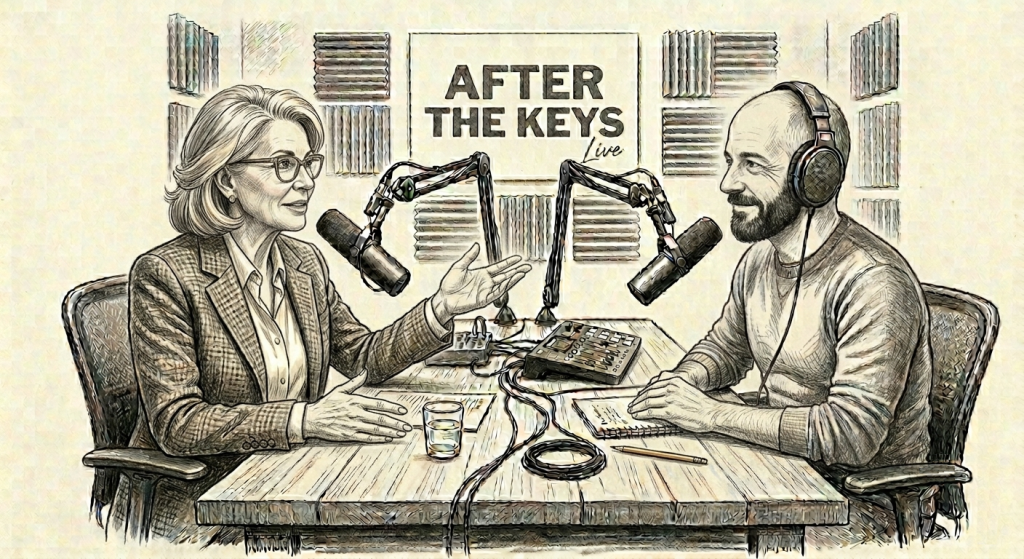
Podcast Host :
Welcome back to After the Keys podcast, where we talk with entrepreneurs about the decisions, risks, and lessons behind building and transitioning out of a company. Today’s conversation is about what happens after the celebration, after the closing documents are signed, and after an owner thinks they have finally reached the finish line.
My guest today is Susan, a woman who built a successful food manufacturing company, grew it into a $22 million revenue business, and sold it four years ago. After 28 years of ownership she thought the sale would give her the freedom to spend more time traveling with her husband and enjoying the next chapter of life.
But the reality turned out to be much more complicated.
Susan, thank you for joining us.
Susan (seller):
Thank you. I appreciate the opportunity because I believe my experience is valuable to other business owners who are considering selling but don’t always understand what life looks like after the transaction.
Podcast Host:
Let’s start there. You sold your company to someone who wasn’t a stranger to the industry. In fact, the buyer was an industry president who had successfully run a $500 million revenue food manufacturing company. That sounds like the ideal buyer.
Susan:
It did. And that was one of the reasons I felt so confident.
This wasn’t someone coming from outside the industry trying to learn the business from scratch. He understood food manufacturing. He understood customers. He understood operations. He had a proven track record leading a much larger organization.
So, from my perspective, I thought, “This company is in great hands.”
And honestly, I still believe he has the capability and intelligence to succeed.
What I didn’t fully appreciate was that running a $500 million company and owning a $22 million company are two completely different experiences.
Podcast Host:
Explain what you mean by that.
Susan:
In a large company, even a very successful executive has layers of support. There are people handling human resources, finance, operations, purchasing, quality, sales strategy, recruiting, and all the daily fires that come up.
When you become the owner of a smaller company, suddenly you’re wearing multiple hats.
You’re not just the president making strategic decisions. You’re also dealing with an employee issue that morning, the customer concern that afternoon, the equipment problem, the cash flow question, the staffing challenge.
Those responsibilities consume time.
And I think that transition was harder than either of us expected.
Podcast Host:
You had an earn-out as part of the transaction, correct?
Susan:
Yes. The earn-out was 12% of the deal.
And when we structured the deal, I understood the basic concept. If the company performed at certain levels, I would receive additional payments.
The attorneys and advisors explained the mechanics. They explained the targets. They explained the structure.
But what I didn’t truly understand was the practical risk.
The earn-out wasn’t just about whether the company was capable of succeeding.
It was about whether the new owner could execute the plan, manage all those additional responsibilities, navigate unexpected challenges, and still hit the performance goals outlined in the agreement.
Those are very different things.
Podcast Host:
That’s an important distinction. The business may have been strong, but the transition itself created new variables.
Susan:
Exactly.
The company had a great foundation. We had talented people, strong customers, and a reputation built over many years.
But ownership transition is its own business challenge.
The buyer had been successful at a very high level, but this was a different environment. He was moving from leading a large organization with extensive resources to personally carrying many more responsibilities.
And those extra hats took time away from some of the very things needed to achieve the earn-out goals.
Podcast Host:
Then there was the seller financing component.
Susan:
Yes. The seller note was 20% of the transaction.
At the time, I viewed it as a positive. It demonstrated confidence in the buyer. It helped bridge the transaction. It gave me additional value beyond the initial payment.
But again, I didn’t fully understand how it would feel to become the lender after you’ve sold your company.
Emotionally, you have moved on. You’ve handed over the keys. You’re supposed to be entering retirement or your next chapter.
But financially, you’re still connected.
Podcast Host:
And the original repayment timeline has changed significantly.
Susan:
Yes.
The original expectation was a five-year repayment period.
Going into year five now, it looks much more like a nine- to eleven-year repayment timeline because of multiple renegotiations and adjustments made along the way.
The economy slowed down. The business faced challenges. The buyer needed exceptions to the original seller financing terms several times.
And I understood why. I wasn’t interested in seeing the company fail.
But every adjustment extended my financial uncertainty.
Podcast Host:
That’s a difficult position because you’re both a former owner and a creditor.
Susan:
That’s exactly right.
You’re emotionally invested because you built the company. You want the buyer to succeed. You want employees protected. You want customers taken care of.
But financially, you also have to think about your own future.
That was the conflict I didn’t anticipate.
Podcast Host:
How did those challenges affect the company?
Susan:
The financial pressure created stress.
The buyer lost some key employees along the way. And because I was concerned about protecting the value of the company and ultimately recovering the seller financing, I became involved in helping find replacements and supporting the transition.
That was never part of my vision.
I thought I would help for maybe six months after closing, help transfer knowledge, introduce relationships, answer questions, and then quietly step away.
Instead, years later, I was still connected.
Podcast Host:
How did that affect your personal plans?
Susan:
That has probably been the hardest part.
My husband and I had plans. We wanted to travel more. We wanted to enjoy the freedom that comes after spending decades building a company.
But when a significant portion of your financial future is tied to a seller note and an earn-out, your freedom is affected.
You don’t feel completely detached.
You’re watching. You’re hoping. You’re concerned.
And it changes how you work with your financial advisors and accountants because your financial picture isn’t what everyone expected it would be after a sale.
Podcast Host:
Looking back, what do you wish you had understood before signing?
Susan:
I wish I had spent more time understanding how these instruments behave in real life.
Not just the textbook explanation.
Not just the best-case scenario where everything performs perfectly.
And not just the worst-case scenario where the business completely fails.
The situation nobody really walked me through was the middle scenario:
The buyer is capable. The company survives. But growth is slower. The transition is harder. The economy changes. Payments get extended. And suddenly you’re still financially tied to the business years later.
That middle scenario is very real.
Podcast Host:
Did you feel your advisors failed you?
Susan:
No. I think they explained the financial instruments accurately.
My attorneys and bankers did their jobs. They explained how earn-outs work. They explained seller financing. They explained the risks.
But I think the conversation focused on structure rather than lived experience.
The question I wish someone had asked me was:
“What happens if the buyer is good, the company is still healthy, but it takes much longer than expected for them to grow into the role?”
Because that’s where I ended up.
Podcast Host:
What advice would you give another owner preparing to sell?
Susan:
I would tell them: Don’t just understand the deal. Understand your life after the deal.
Ask yourself:
How much of my future am I comfortable having tied to someone else’s performance?
How long am I willing to stay emotionally connected?
What happens if the earn-out doesn’t happen?
What happens if seller financing takes twice as long?
And most importantly, understand that selling your company doesn’t always mean you’re done with your company.
Sometimes you’re still carrying responsibility, just in a different form.
Podcast Host:
That’s a powerful lesson.
Selling a business is often portrayed as the finish line, but as Susan’s story shows, sometimes it’s the beginning of a completely different relationship with the company you built.
Susan, thank you for sharing such an honest perspective.
Susan:
Thank you, Mark. If my experience helps another owner ask better questions before they sell, then sharing it was worth it.
Podcast Host:
And to everyone listening, remember: the transaction isn’t just about the money you receive at closing. It’s also about the obligations, risks, and relationships that continue afterward.
Thanks for joining us on After the Keys podcast. Please join us in two weeks, same time, same place, for another Owner Conversation, where we’ll explore the challenges, lessons, and transitions business owners experience as they exit their businesses and embrace what’s next.
Even after spending significant time and money on attorneys, investment bankers, CPAs, and other trusted advisors, one reality remains: the experience that follows the transaction is still largely unknown.
Two business owners can complete nearly identical due diligence, negotiate virtually the same terms, and close transactions that look almost identical on paper, yet go on to have dramatically different retirement experiences. That’s because life after a sale is shaped by far more than the transaction itself.
No two businesses are exactly alike, and more importantly, no two business owners are alike. Your personal relationships, identity, health, purpose, family, and goals often have a greater influence on your post-sale satisfaction than the deal terms themselves.
By considering the factors that exist beyond the scope of the transaction, not just the financial and legal details, you can significantly improve your emotional well-being and overall satisfaction long after the closing celebration has ended.
I would love to hear your feedback or observations if you choose to share.