
Learning From Conversations
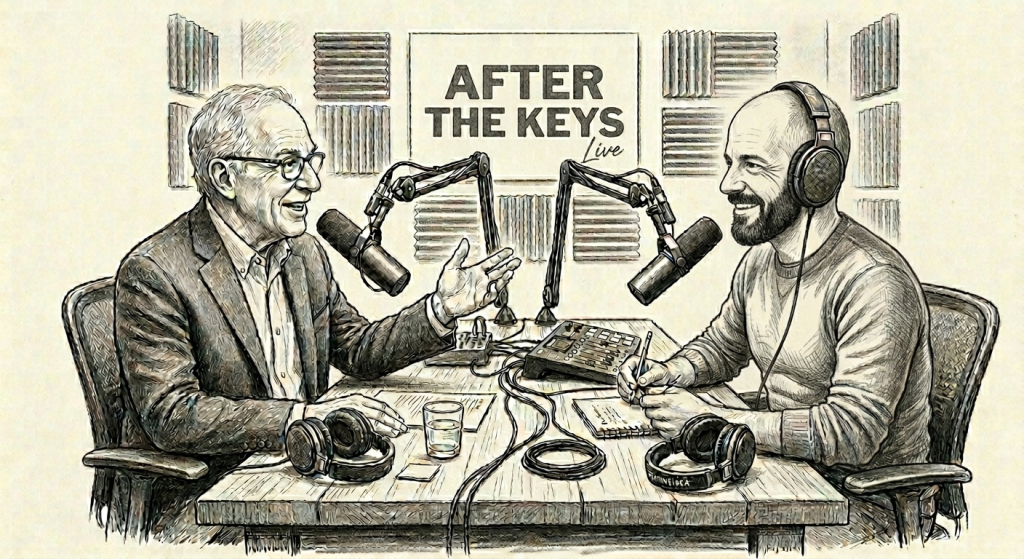
Podcast Host:
Welcome back to the show. Today’s conversation is a little different. We’re talking about what happens after the transaction, after the congratulations, after the wire hits the account, after everyone tells you that you’ve reached the ultimate definition of success.
My guest today is a 64-year-old entrepreneur who sold the company he built after decades of hard work. It has now been 14 months since the sale, and he’s here to talk openly about something many owners don’t spend enough time thinking about: what happens when the company you built is no longer yours.
Thanks for joining us.
Frank:
Thanks for having me. I think this is an important conversation because when you’re building a company, almost everything is focused on the business, growth, employees, customers, solving problems, creating value. The idea of selling becomes this finish line.
But what I’ve learned is that selling the company isn’t the finish line. It’s actually the beginning of a completely different chapter, and I don’t think I spent enough time preparing for that chapter.
Podcast Host:
Let’s go back to the day after the transaction. You had accomplished what many entrepreneurs spend their entire careers working toward. What did you think life would look like?
Frank:
Honestly, I thought I had it figured out. I thought, “I’m going to play golf six days a week. I love golf. I’ve always loved golf. Finally, I’ll have the time.”
But what I realized was that my relationship with golf was different when it wasn’t a choice, when it wasn’t squeezed between business meetings, customer visits, and responsibilities.
During my career, I probably only played about one round a week, and many of those rounds were with customers or business relationships. Golf was connected to the business world.
After I retired, I had unlimited time, but I didn’t necessarily have unlimited motivation. I found that I wasn’t motivated to playing six days a week. Sometimes I play a couple of times a week.
That was a surprise.
Podcast Host:
Why do you think that happened?
Frank:
I think I underestimated how much purpose came from the business itself.
The company wasn’t just a job. It was my identity. It was relationships. It was challenges. It was waking up every morning knowing there were problems to solve and people counting on me.
For 38 years, I had a reason to get up.
Now, I can sleep later if I want. Nobody is waiting for me to make a decision. Nobody needs me to solve the problem of the day.
And while that sounds great when you’re working 70-hour weeks, when you lose that structure, you realize how much energy came from being needed.
Podcast Host:
You mentioned before the show your wife wanted to travel more, and you’ve done more traveling together. How has that transition been?
Frank:
Actually, it’s been good. My wife always wanted more travel, and we’ve definitely done more of it.
The challenge is that travel means different things to each of us.
My whole career involved a tremendous amount of business travel. Airports, hotels, meetings, being away from home, I did that for years.
So when I retired, I was thinking, “I finally get to be home.”
My wife was thinking, “Great, now we can go everywhere.”
(Laughs)
She loves exploring new places. I enjoy it, but I don’t have the same appetite for it because I spent so much of my life traveling.
Podcast Host:
You’ve also talked about how your wife has adjusted to having you around more.
Frank:
Yes, and that’s been an interesting part of this transition.
For years, I was gone a lot. She had her routines, her friends, her activities. Now I’m home much more.
She loves me being around, but I think the reality is that going from having your own separate rhythms for decades to suddenly sharing almost every day takes adjustment.
She has weekly groups and activities with friends, and sometimes she feels guilty leaving me home alone.
I keep telling her, “Don’t stop doing those things. You need your friendships and your independence.”
But I understand why she feels that way. We’re both learning what this new version of life looks like.
Podcast Host:
You mentioned mornings have been difficult. What does a typical day look like?
Frank:
The interesting thing is I still do things I’ve always done. I get up early. I take our dogs for a three or four mile walk every morning.
That routine has stayed with me.
But I’ll admit there are mornings where I wake up and think, “What am I really getting up for today?”
That’s something I never experienced when I owned the company.
There was always a mission.
Now I’m trying to create a new one.
Podcast Host:
Do you miss the business?
Frank:
More than I expected.
I miss the challenges. I miss the people. I miss the employees who were part of the journey for years. I miss sitting across the table from customers and solving problems.
You spend decades building relationships, and then overnight, you’re no longer part of those conversations.
That’s been harder than I anticipated.
Podcast Host:
Looking back, do you think selling was the wrong decision?
Frank:
I wouldn’t say that. The transaction was successful, and I’m grateful for the opportunity.
But I do question the mindset that led me there.
There was a lot of outside messaging: “You need to sell now. The market is strong. This may be your last opportunity. You need to maximize your value.”
And I listened.
What I wonder now is whether I was making the decision because it was truly what I wanted, or because I was trying to meet other people’s definition of success.
Was I trying to prove something?
Was I trying to show the world that I had made it?
Those are questions I’ve thought about.
Podcast Host:
Do you think you could have continued running the company longer?
Frank:
Possibly.
One thing I’ve thought about is that maybe the problem wasn’t the business, maybe the problem was the structure around me.
If I had spent more time developing key leaders, creating the right systems, and removing myself from some of the daily pressure, maybe I could have continued enjoying ownership without feeling the burnout that contributed to wanting a change.
Entrepreneurs sometimes think the only choices are:
“Keep doing everything yourself,” or “sell.”
But there’s probably a third option: redesign the business so it supports the life you want.
Podcast Host:
How has managing wealth after the sale been different?
Frank:
That has been a bigger adjustment than I expected.
For my entire career, if something unexpected happened financially, my solution was simple: go create more business.
Need more revenue? Find customers. Solve problems. Work harder.
Now, that lever is gone.
The money is invested. Advisors are managing it. I have to trust a process that I’m not controlling every day.
That’s uncomfortable for an entrepreneur.
Entrepreneurs are wired to take action and create outcomes. Sitting back and watching assets grow is a completely different mindset.
Podcast Host:
If you could go back and give yourself advice before selling, what would you tell yourself?
Frank:
I would tell myself to start preparing much earlier. Not six months before a transaction. Not when you’re burned out. Probably seven or eight years earlier.
I would have spent more time thinking about all the things beyond the sale price.
Questions like:
Who am I without the company?
What relationships do I want to maintain?
What activities will give me purpose?
What will my days look like?
What am I moving toward, not just what am I moving away from?
Because selling a company solves the financial question, but it doesn’t automatically solve the life question.
Podcast Host:
What advice would you give current owners who are listening?
Frank:
First, don’t wait until you’re exhausted to think about your next chapter.
Start planning your transition years before you think you’ll need it.
Second, don’t make the mistake of believing the transaction itself is the goal. The transaction is just a tool to create the next phase of your life.
And most importantly, make sure your “next” is better than running your company.
Because if your next chapter isn’t more fulfilling, more meaningful, and more aligned with who you want to become, then why make the change?
A lot of entrepreneurs spend their lives building a valuable company.
The challenge is making sure they also build a valuable life after the company.
Podcast Host:
That’s a powerful way to end.
The lesson here is that succession planning isn’t just about preparing the company for a new owner. It’s about preparing the owner for a new life.
Thank you for sharing your story.
Frank:
Thank you. I hope it helps someone start thinking about these questions before they’re standing on the other side of the deal wondering, “What comes next?”
If you are like most business owners, you are likely too focused on the value of the company and the future transaction. Your life neither begins nor ends with the life of your business. That fact alone should help you recognize that there are many personal considerations tied to selling your company. The regrets expressed by many business owners after a transaction all too often reinforce this reality.
Think about it this way: the longer you train for a marathon or triathlon, the better your performance will be on race day.
Don’t rush your exit. Understand the race. Listen to those who have completed it successfully and those who have not. Invest the time to learn so that there are as few surprises as possible during and after the transaction.
No one wants to walk away from a race battered, injured, or disappointed. Regret is more often the result of inadequate preparation than excessive preparation.
I would love to hear your feedback or observations if you choose to share.
Austec Pre-Diligence Risk Exposure System